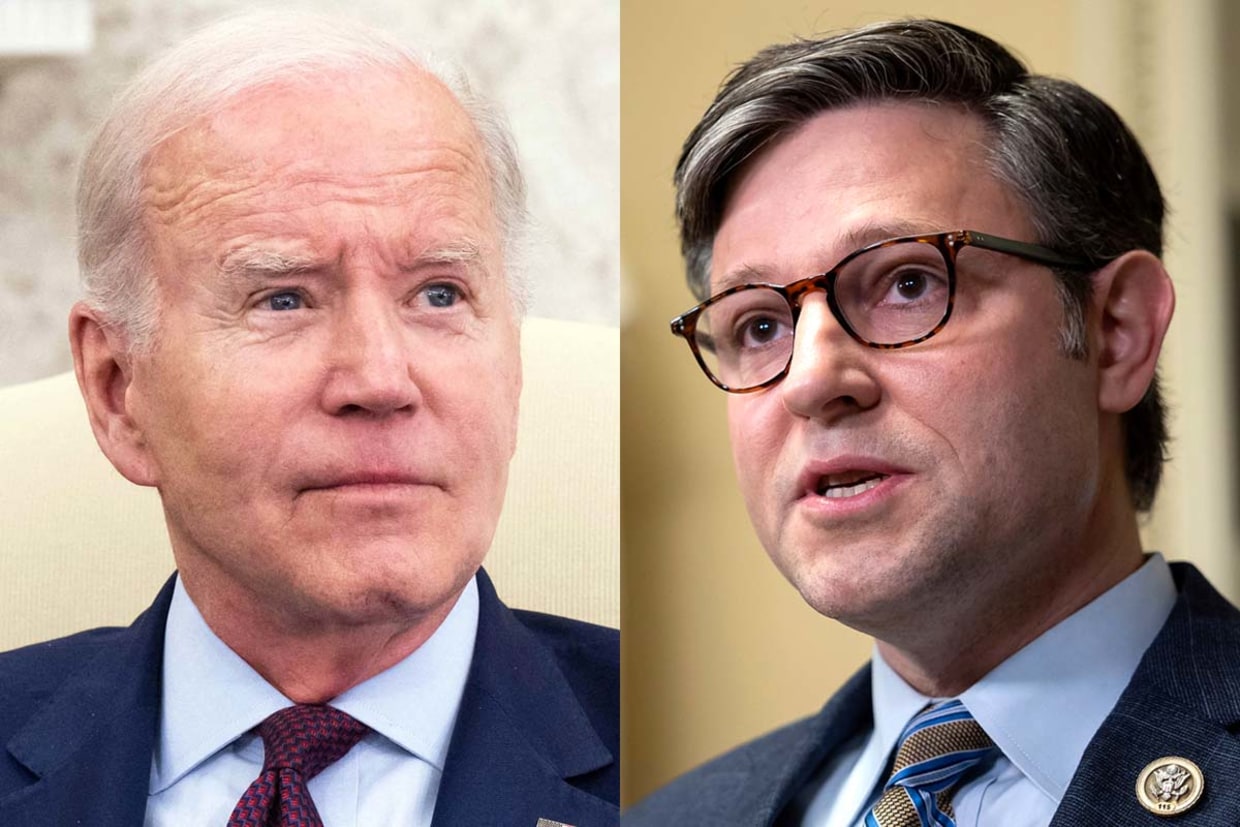
In recent developments, House Speaker Mike Johnson, a prominent Republican from Louisiana, has expressed the desire for a one-on-one meeting with President Joe Biden before progressing with a supplemental aid package, including funding for Ukraine and Israel. This FAQ guide aims to provide clear and concise answers to common questions surrounding Speaker Johnson’s meeting request, shedding light on the political dynamics, legislative implications, and the broader context of aid packages for U.S. allies.
1. Why does House Speaker Mike Johnson want a meeting with President Joe Biden?
Answer: Speaker Johnson seeks an in-person, one-on-one meeting with President Biden to discuss the path forward on a legislative package, particularly focusing on supplemental aid for Ukraine and Israel. The requests for a meeting have been ongoing for the past two months.
2. What triggered Speaker Johnson’s desire for a meeting with President Biden?
Answer: Speaker Johnson’s interest in a meeting intensified after his recent trip to the U.S. border in Eagle Pass, Texas. The discussions are not solely about the Senate’s version of the supplemental aid but encompass a broader legislative approach.
3. What is the status of the Senate’s $95 billion national security package?
Answer: The Senate has passed a bipartisan $95 billion national security package, including aid for Ukraine, Israel, and Taiwan, with support from 70 senators.
4. What is House Majority Leader Steve Scalise’s stance on the meeting request?
Answer: House Majority Leader Scalise stated that President Biden refuses to meet with Speaker Johnson. Scalise emphasizes the importance of their meeting to reach an agreement on crucial issues, expressing concerns about the president’s commitment to Ukraine and border security.
5. How does the White House respond to Speaker Johnson’s meeting requests?
Answer: The White House points to what they perceive as inconsistencies in Speaker Johnson’s stance on the border. They suggest he needs to conclude negotiations and prioritize national security instead of playing politics.
6. Has President Biden met with Speaker Johnson in the recent past?
Answer: Yes, President Biden met with Speaker Johnson less than a month ago to discuss a bipartisan immigration deal, which would have unlocked aid to Ukraine. The meeting was deemed “productive.”
7. What are Speaker Johnson’s conditions for supporting an aid package?
Answer: Speaker Johnson has insisted that any aid package must be accompanied by changes to U.S. border policy. However, Senate Republicans rejected the bipartisan border security bill negotiated between parties, leading to criticism from Johnson.
8. What are the potential options for Speaker Johnson regarding the aid package for Ukraine and Israel?
Answer: One option for Speaker Johnson is to put the Senate-passed aid package to a vote on the House floor. However, increasing skepticism among Republicans on aid to Ukraine makes this scenario less likely.
9. What is the White House’s message to House Republicans regarding the aid package?
Answer: White House spokesman Andrew Bates urges House Republicans to pass the Senate bill, emphasizing the choice between supporting American national security or aligning with political motives that could benefit Vladimir Putin and the regime in Tehran.
Conclusion:
Speaker Mike Johnson’s quest for a meeting with President Biden adds a layer of complexity to the ongoing discussions on aid packages for Ukraine and Israel. This FAQ guide has provided insights into the key players, motivations, and challenges surrounding this political maneuvering. Readers are encouraged to share additional questions or insights in the comments section below, fostering engagement and interaction.
 Newspulse
Leave a comment