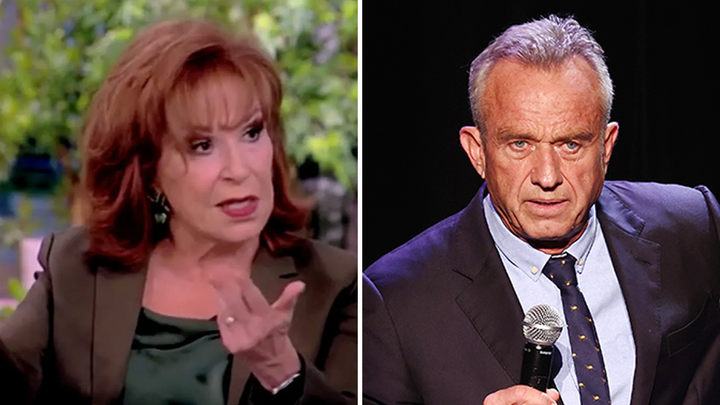
In the realm of politics, where narratives often intertwine with fears and uncertainties, it’s crucial to dissect and evaluate every claim with precision and clarity. Recently, there has been a surge of concern regarding the potential impact of third-party candidates on the political landscape, particularly in relation to the upcoming elections. One such assertion, voiced by Joy Behar, suggests that Robert F. Kennedy Jr.’s candidacy could spell disaster if it contributes to the re-election of former President Trump. Let’s delve into this assertion and unravel the complexities surrounding it.
Understanding the Concerns
Joy Behar’s apprehension stems from the belief that the presence of third-party candidates could fragment the voting base, ultimately benefiting candidates with polarizing agendas. In this case, the fear revolves around the possibility of Robert F. Kennedy Jr.’s candidacy siphoning off votes from mainstream candidates, thereby paving the way for the return of former President Trump to power. This scenario, according to Behar, poses a significant threat to the country’s stability and democratic values.
Evaluating the Impact
While Behar’s concerns are rooted in genuine apprehension for the country’s well-being, it’s essential to analyze the empirical evidence surrounding the impact of third-party candidates on elections. Historically, third-party candidates in the United States have rarely posed a significant threat to mainstream candidates. Instead, they often serve as conduits for disenfranchised voters, offering alternative perspectives and platforms that may resonate with certain segments of the population.
The Role of Third-Party Candidates
Third-party candidates play a vital role in diversifying the political discourse and challenging the status quo. By presenting alternative policy proposals and engaging in debates, they force mainstream candidates to address issues that may have otherwise been overlooked. In essence, they contribute to a more robust and inclusive democratic process, wherein a multitude of voices are heard and represented.
Dispelling Misconceptions
The notion that third-party candidates are solely responsible for the electoral outcomes is overly simplistic and fails to account for the myriad factors that influence voters’ decisions. Blaming third-party candidates for potential outcomes undermines the agency of voters and overlooks the complexities of the political landscape. Rather than assigning blame, it’s crucial to foster informed dialogue and encourage voters to critically evaluate their options.
The Real Threat: Polarization and Division
While third-party candidates may present a divergence from the traditional two-party system, the real threat to democracy lies in the polarization and division that permeate contemporary politics. The vilification of opposing viewpoints, coupled with the erosion of trust in institutions, poses a far greater risk to the fabric of society than the presence of alternative candidates. To safeguard democracy, it’s imperative to foster unity amidst diversity and promote civil discourse across ideological lines.
Conclusion
In conclusion, the assertion that Robert F. Kennedy Jr.’s candidacy has the potential to destroy the country if it contributes to former President Trump’s re-election is founded on misconceptions surrounding the role of third-party candidates in elections. While concerns about electoral outcomes are valid, attributing blame to third-party candidates oversimplifies the complexities of the political process. Instead of scapegoating, we must strive to foster an environment of informed discourse and civic engagement, wherein the diversity of opinions is celebrated rather than vilified.
 Newspulse
Leave a comment